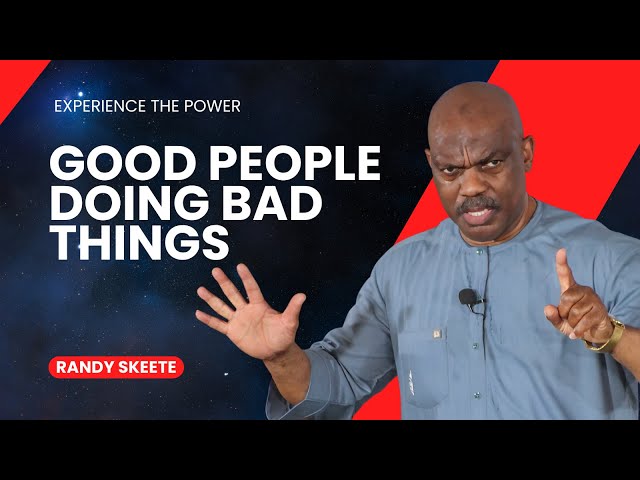
When Good Individuals Do Dangerous Issues explores the complexities of human habits and the the reason why even people with good intentions can have interaction in dangerous actions. The phrase highlights the stress between our ethical values and our capability for wrongdoing.
Inspecting this matter is essential for understanding the human situation and growing methods to stop future atrocities. All through historical past, numerous examples have demonstrated the devastating penalties when good individuals succumb to harmful impulses, whether or not pushed by worry, greed, or misguided beliefs.
This text delves into the psychological, social, and situational components that may affect good individuals to do unhealthy issues. By exploring case research, analysis findings, and philosophical views, we purpose to make clear this complicated phenomenon and contribute to a extra simply and compassionate society.
When Good Individuals Do Dangerous Issues
Understanding the the reason why good individuals do unhealthy issues is essential for stopping future atrocities and selling a simply and compassionate society. Listed below are a number of key elements to think about:
- Ethical Blindness: Failing to acknowledge the dangerous penalties of 1’s actions.
- Cognitive Biases: Distortions in pondering that result in flawed decision-making.
- Groupthink: Suppressing particular person dissent in favor of group conformity.
- Obedience to Authority: Unquestioningly following orders, even after they battle with ethical values.
- Diffusion of Accountability: Believing that one’s actions are much less vital when a part of a bunch.
- Dehumanization: Viewing others as lower than human, making it simpler to inflict hurt.
- Scapegoating: Blaming others for one’s personal wrongdoings.
- Ethical Licensing: Feeling entitled to have interaction in unhealthy habits after doing one thing good.
- Situational Elements: Excessive circumstances, similar to warfare or poverty, can erode ethical values.
These elements are interconnected and might affect one another. As an example, ethical blindness can result in cognitive biases, which in flip can contribute to groupthink and obedience to authority. Understanding these dynamics is crucial for growing efficient methods to stop dangerous habits.
Ethical Blindness
Ethical blindness is an important part of understanding why good individuals do unhealthy issues. It refers back to the incapacity to acknowledge the dangerous penalties of 1’s actions, even when these penalties are apparent to others. This may happen for numerous causes, together with cognitive biases, emotional detachment, and an absence of empathy.
One widespread trigger of ethical blindness is cognitive biases. These are psychological shortcuts that may lead us to make flawed judgments. For instance, the affirmation bias causes us to hunt out data that confirms our present beliefs, whereas ignoring proof that contradicts them. This may lead us to miss the potential harms of our actions in the event that they align with our preconceived notions.
One other issue that may contribute to ethical blindness is emotional detachment. After we are emotionally indifferent from a state of affairs, it may be simpler to disregard the struggling of others. This is usually a explicit downside in conditions the place we’re making selections that have an effect on massive teams of individuals, similar to in politics or enterprise.
Lastly, an absence of empathy may also result in ethical blindness. Empathy is the power to grasp and share the emotions of others. After we lack empathy, it may be tough to understand the hurt that our actions could trigger. This may lead us to make selections which might be dangerous to others with out realizing it.
Understanding the function of ethical blindness is essential for stopping dangerous habits. By being conscious of our personal biases and limitations, we are able to take steps to keep away from making selections that we could later remorse. We are able to additionally work to develop empathy and compassion for others, which may help us to make extra moral decisions.
Cognitive Biases
Cognitive biases are systematic errors in pondering that may result in flawed decision-making. They’re a significant contributing issue to why good individuals do unhealthy issues. Listed below are 4 widespread cognitive biases that may have a big influence on our habits:
- Affirmation bias: The tendency to hunt out data that confirms our present beliefs, whereas ignoring proof that contradicts them. This may lead us to make selections which might be primarily based on incomplete or inaccurate data.
- Hindsight bias: The tendency to consider that we may have predicted an occasion after it has already occurred. This may lead us to overestimate our personal talents and in charge others for issues that had been past their management.
- Framing bias: The tendency to make completely different selections relying on how data is offered to us. This may lead us to make selections that aren’t in our greatest pursuits.
- Groupthink: The tendency to adapt to the opinions of the group, even after we know that these opinions are flawed. This may lead us to make selections that we might not make if we had been pondering independently.
These are just some of the numerous cognitive biases that may affect our decision-making. By being conscious of those biases, we are able to take steps to keep away from them and make extra rational and moral decisions.
Groupthink
Groupthink is a phenomenon that happens when a bunch of individuals are so centered on reaching a consensus that they suppress particular person dissent and important pondering. This may result in flawed decision-making and unethical habits, because the group could also be extra involved with sustaining concord than with making the very best resolution.Groupthink is a significant contributing issue to “when good individuals do unhealthy issues.” It is because groupthink can lead individuals to make selections that they might not make in the event that they had been pondering independently. For instance, groupthink can lead individuals to go together with a choice that they know is flawed, just because they don’t need to rock the boat.There are a number of real-life examples of how groupthink has led to unhealthy selections. One instance is the Bay of Pigs invasion, which was a failed try by america to overthrow the Cuban authorities in 1961. The choice to invade Cuba was made by a bunch of advisors who had been so centered on reaching a consensus that they ignored the numerous warning indicators that the invasion was doomed to fail.One other instance of groupthink is the Challenger catastrophe, which occurred in 1986 when the house shuttle Challenger exploded shortly after takeoff. The choice to launch the Challenger was made by a bunch of NASA engineers who had been so centered on assembly a deadline that they ignored the warnings of a number of engineers who had issues concerning the security of the shuttle.These are simply two examples of how groupthink can result in unhealthy selections. It is very important concentrate on the risks of groupthink and to take steps to keep away from it. One solution to keep away from groupthink is to encourage open dialogue and dissent. It is usually vital to have a satan’s advocate, somebody who’s prepared to problem the group’s assumptions and various viewpoints.Understanding the connection between groupthink and “when good individuals do unhealthy issues” is vital for stopping future tragedies. By being conscious of the risks of groupthink, we are able to take steps to keep away from it and make higher selections.
Obedience to Authority
Obedience to authority is a significant contributing issue to “when good individuals do unhealthy issues.” It is because people who find themselves obedient to authority could also be extra prone to observe orders, even when these orders battle with their very own ethical values. This may result in conditions the place individuals commit acts that they might not usually take into account doing, just because they’re following orders from somebody they understand as an authority determine.
There are various real-life examples of how obedience to authority has led to unhealthy selections. One instance is the Milgram experiment, which was a sequence of experiments performed by psychologist Stanley Milgram within the Sixties. Within the Milgram experiment, individuals had been ordered to manage electrical shocks to a different particular person. The shocks had been more and more intense, and plenty of individuals continued to manage the shocks, even when the opposite particular person was screaming in ache. This experiment confirmed that individuals are prepared to obey authority figures, even when it means doing one thing that they know is flawed.
One other instance of how obedience to authority can result in unhealthy selections is the Holocaust. Throughout the Holocaust, many individuals obeyed orders to take part within the genocide of the Jewish individuals. These individuals could have recognized that what they had been doing was flawed, however they adopted orders anyway as a result of they believed that they had been doing their responsibility.Understanding the connection between obedience to authority and “when good individuals do unhealthy issues” is vital for stopping future tragedies. By being conscious of the risks of obedience to authority, we are able to take steps to keep away from it. One solution to keep away from obedience to authority is to query authority figures and to be vital of their orders. It is usually vital to do not forget that we’re in the end liable for our personal actions, even when we’re following orders from another person.
Obedience to authority is a posh problem, and there’s no straightforward reply to the query of the way to keep away from it. Nevertheless, by being conscious of the risks of obedience to authority, we are able to take steps to cut back its affect in our lives. This may help us to make higher selections and to keep away from doing issues that we could later remorse.
Diffusion of Accountability
Diffusion of duty is a social psychological phenomenon that happens when people really feel much less liable for their actions when they’re a part of a bunch. This may result in conditions the place individuals have interaction in dangerous or unethical habits that they might not usually do in the event that they had been performing alone.
Diffusion of duty is a significant contributing issue to “when good individuals do unhealthy issues.” It is because it could actually lead individuals to consider that their particular person actions are much less vital when they’re a part of a bunch. This may make it simpler for individuals to justify dangerous or unethical habits, as they could really feel that they don’t seem to be personally liable for the results of their actions.
There are various real-life examples of how diffusion of duty has led to unhealthy selections. One instance is the Stanford jail experiment, which was a psychological experiment performed in 1971. Within the Stanford jail experiment, individuals had been randomly assigned to be both prisoners or guards. The guards got the authority to implement the principles of the jail, and the prisoners had been anticipated to obey the guards’ orders. Over time, the guards started to abuse their energy, and the prisoners turned more and more passive and obedient. This experiment confirmed how diffusion of duty can result in dangerous habits, even amongst people who find themselves not usually violent or aggressive.
One other instance of how diffusion of duty can result in unhealthy selections is the Holocaust. Throughout the Holocaust, many individuals participated within the genocide of the Jewish individuals, although they could not have personally agreed with the Nazi ideology. These individuals could have felt that they weren’t personally liable for the Holocaust, as they had been merely following orders from their superiors.Understanding the connection between diffusion of duty and “when good individuals do unhealthy issues” is vital for stopping future tragedies. By being conscious of the risks of diffusion of duty, we are able to take steps to keep away from it. One solution to keep away from diffusion of duty is to guarantee that we’re all the time conscious of our personal actions and the results of these actions. We must also watch out to not let ourselves be influenced by the actions of others, and we must always all the time converse up if we see one thing flawed.
Diffusion of duty is a posh problem, and there’s no straightforward reply to the query of the way to keep away from it. Nevertheless, by being conscious of the risks of diffusion of duty, we are able to take steps to cut back its affect in our lives. This may help us to make higher selections and to keep away from doing issues that we could later remorse.
Dehumanization
Dehumanization is a significant contributing issue to “when good individuals do unhealthy issues.” It’s the technique of denying the humanity of others, which makes it simpler to inflict hurt upon them. Dehumanization can happen in many alternative methods, similar to via the usage of language, stereotypes, and discrimination.
There are various real-life examples of how dehumanization has led to atrocities. One instance is the Holocaust, throughout which the Nazis dehumanized the Jewish individuals with a purpose to justify their genocide. One other instance is the Rwandan genocide, throughout which the Hutu individuals dehumanized the Tutsi individuals with a purpose to justify their mass homicide.
Understanding the connection between dehumanization and “when good individuals do unhealthy issues” is essential for stopping future atrocities. By being conscious of the risks of dehumanization, we are able to take steps to keep away from it. One solution to keep away from dehumanization is to problem stereotypes and prejudices. We must also watch out to not use language that dehumanizes others.
Dehumanization is a posh problem, and there’s no straightforward reply to the query of the way to keep away from it. Nevertheless, by being conscious of the risks of dehumanization, we are able to take steps to cut back its affect in our lives. This may help us to make higher selections and to keep away from doing issues that we could later remorse.
Scapegoating
Scapegoating is a significant contributing issue to “when good individuals do unhealthy issues.” It’s the technique of blaming others for one’s personal errors or wrongdoings. This is usually a very efficient solution to keep away from taking duty for one’s personal actions, and it can be a solution to make oneself really feel higher about oneself. Nevertheless, scapegoating can have severe penalties, each for the person and for society as an entire.
Scapegoating can result in plenty of issues, together with:
- Elevated battle and pressure between teams of individuals
- A scarcity of belief and cooperation
- Violence and even warfare
Scapegoating is a significant issue that may have devastating penalties. It is very important concentrate on the risks of scapegoating and to keep away from partaking on this habits. If you end up blaming others to your personal errors, take a step again and attempt to see the state of affairs from a distinct perspective. It might be tough to confess that you’re flawed, however you will need to accomplish that with a purpose to be taught out of your errors and keep away from repeating them sooner or later.
There are a variety of issues that may be accomplished to cut back scapegoating. One vital step is to teach individuals concerning the risks of scapegoating. It is usually vital to create a local weather of belief and cooperation, the place individuals really feel comfy admitting their errors and looking for assist from others.
Ethical Licensing
Ethical licensing is a psychological phenomenon that refers back to the tendency for people to really feel entitled to have interaction in unhealthy habits after doing one thing good. This is usually a main contributing issue to “when good individuals do unhealthy issues.”
There are a variety of the reason why ethical licensing happens. One purpose is that folks could really feel that they’ve “earned” the appropriate to have interaction in unhealthy habits after doing one thing good. Another excuse is that folks could really feel that they’ll compensate for his or her unhealthy habits by doing one thing good sooner or later.
Regardless of the purpose, ethical licensing can have plenty of detrimental penalties. For instance, it could actually lead individuals to behave extra aggressively, cheat on their taxes, or have interaction in different unethical habits. Ethical licensing may also make it harder for individuals to confess their errors and apologize for his or her wrongdoings.
It is very important concentrate on the risks of ethical licensing and to take steps to keep away from it. One solution to keep away from ethical licensing is to be aware of your personal habits and to keep away from making excuses to your unhealthy actions. It is usually vital to do not forget that everybody makes errors and that it’s okay to apologize to your wrongdoings.
Situational Elements
The connection between situational components and the erosion of ethical values is an important side of understanding why good individuals typically do unhealthy issues. Excessive circumstances, similar to warfare or poverty, can put super pressure on a person’s ethical compass, making it harder to stick to moral ideas.
In occasions of warfare, for instance, troopers could also be compelled to make life-or-death selections that go in opposition to their private values. The extraordinary strain and worry of fight can lead people to rationalize actions they might by no means take into account in peacetime. Equally, poverty can create determined conditions the place individuals really feel they haven’t any alternative however to steal or have interaction in different immoral habits to outlive.
Understanding the function of situational components in ethical erosion is crucial for growing efficient methods to stop atrocities and promote moral conduct. By recognizing the challenges people face in excessive circumstances, we are able to higher assist them and create environments that foster ethical decision-making.
Actual-life examples abound for example the connection between situational components and ethical erosion. Throughout the Vietnam Warfare, troopers had been recognized to commit atrocities in opposition to civilians, together with the notorious My Lai bloodbath. Whereas these actions can’t be excused, you will need to take into account the intense psychological and emotional stress that troopers endured throughout that battle.
Equally, in impoverished communities, crime charges are usually increased than in additional prosperous areas. Whereas poverty doesn’t justify legal habits, it’s a vital contributing issue that should be addressed via social and financial interventions.
Addressing the challenges posed by situational components is a posh job, however it’s important for making a extra simply and moral society. By offering assist, sources, and schooling, we are able to empower people to make ethical decisions even in essentially the most tough circumstances.
When Good Individuals Do Dangerous Issues
This FAQ part addresses widespread issues and misconceptions surrounding the subject of “when good individuals do unhealthy issues.” Every query is answered concisely and informatively to offer a deeper understanding of this complicated problem.
Query 1: Is it attainable for genuinely good individuals to commit heinous acts?
Reply: Sure, situational components, cognitive biases, and ethical disengagement can erode ethical values, even in people with good intentions.
Query 2: What are some widespread situational components that may contribute to ethical erosion?
Reply: Excessive circumstances similar to warfare, poverty, or social unrest can create intense strain and stress, making it tough to stick to moral ideas.
Query 3: Can individuals who do unhealthy issues ever be redeemed?
Reply: Redemption is a posh idea, however it’s attainable for people to acknowledge their wrongdoings, search forgiveness, and work in the direction of constructive change.
Query 4: What’s the function of empathy in stopping “good individuals” from doing unhealthy issues?
Reply: Empathy permits us to grasp the views and struggling of others, fostering compassion and making it tougher to justify dangerous actions.
Query 5: How can we create environments that promote moral decision-making?
Reply: Schooling, open dialogue, and social assist techniques may help people develop robust ethical values and resist situational pressures that will compromise their ethics.
Query 6: Is it truthful to evaluate individuals who do unhealthy issues in tough circumstances?
Reply: Whereas situational components can present context, they don’t excuse immoral habits. Nevertheless, understanding these components may help us develop extra compassionate and efficient responses to wrongdoing.
Abstract: Understanding the complexities of “when good individuals do unhealthy issues” is essential for fostering moral societies. Recognizing the affect of situational components, selling empathy, and creating supportive environments can empower people to make ethical decisions even in difficult circumstances.
Transition: This FAQ part has offered insights into numerous elements of this matter. The next article will delve deeper into the psychological and social dynamics that contribute to “when good individuals do unhealthy issues.”
Tricks to Keep away from “When Good Individuals Do Dangerous Issues”
Understanding the the reason why good individuals do unhealthy issues may help us develop methods to stop such occurrences and promote moral habits. Listed below are a number of tricks to take into account:
Tip 1: Be Conscious of Cognitive Biases
Cognitive biases can distort our pondering and result in flawed decision-making. By being conscious of those biases, similar to affirmation bias and groupthink, we are able to take steps to keep away from them and make extra rational decisions.
Tip 2: Promote Empathy and Compassion
Empathy permits us to grasp the emotions and views of others. By fostering empathy and compassion, we are able to develop a stronger sense of connection to others, making it tougher to justify inflicting hurt.
Tip 3: Encourage Important Considering and Dissent
Groupthink can result in poor decision-making. Encourage vital pondering, open dialogue, and dissent to problem assumptions and take into account various viewpoints.
Tip 4: Resist Dehumanization
Dehumanization makes it simpler to inflict hurt upon others. Problem stereotypes, prejudices, and language that dehumanizes individuals, and promote inclusivity and respect for range.
Tip 5: Tackle Situational Pressures
Excessive circumstances can erode ethical values. Determine and deal with situational components that will contribute to unethical habits, similar to poverty, discrimination, or social unrest.
The following pointers may help us create environments that promote moral decision-making and scale back the chance of “when good individuals do unhealthy issues.” By elevating consciousness, fostering empathy, and inspiring vital pondering, we are able to work in the direction of a extra simply and compassionate society.
Conclusion: Understanding and addressing the components that contribute to “when good individuals do unhealthy issues” is crucial for stopping such occurrences and selling moral habits. By implementing the following pointers, we are able to create a society the place good individuals persistently make good decisions.
Conclusion
Exploring the intricacies of “when good individuals do unhealthy issues” has make clear the complexities of human habits. Now we have examined cognitive biases, situational pressures, and psychological mechanisms that may contribute to the erosion of ethical values, even in people with good intentions.
Understanding these components is essential for fostering moral societies. By selling empathy, vital pondering, and inclusivity, we are able to create environments that assist and encourage good individuals to make good decisions. It’s a collective duty to deal with situational challenges that will compromise ethical values, similar to poverty, discrimination, and social unrest.
Youtube Video: