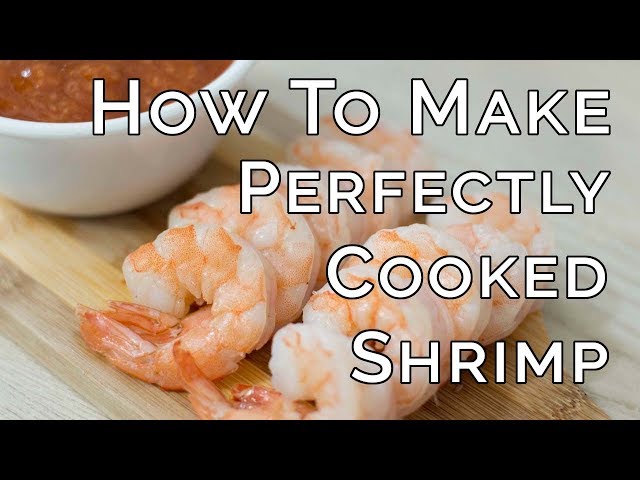
Temperature of cooked shrimp refers back to the inner temperature that the shrimp reaches after being cooked. It is a vital think about making certain the protection and high quality of the shrimp.
The really helpful inner temperature for cooked shrimp is 120F (54C). This temperature is excessive sufficient to kill micro organism that could be current within the shrimp, however it isn’t so excessive that the shrimp turns into overcooked and difficult. Overcooked shrimp may be dry, rubbery, and troublesome to digest.
To make sure that the shrimp is cooked to the right temperature, you will need to use a meals thermometer. Insert the thermometer into the thickest a part of the shrimp, being cautious to not contact the bone. The shrimp is cooked when the thermometer reads 120F (54C).
As soon as the shrimp is cooked, it must be eaten instantly or refrigerated promptly. Cooked shrimp may be saved within the fridge for as much as 3 days.
Temp of Cooked Shrimp
The temperature of cooked shrimp is a vital think about making certain its security and high quality. Listed below are 8 key points to think about:
- Goal temperature: 120F (54C)
- Measurement device: Meals thermometer
- Cooking technique: Varies relying on the tactic (boiling, steaming, grilling, and so forth.)
- Impact of overcooking: Dryness, toughness, issue in digestion
- Quick consumption: Advisable for optimum taste and texture
- Refrigeration: Retailer cooked shrimp within the fridge for as much as 3 days
- Meals security: Inner temperature of 120F (54C) kills dangerous micro organism
- Texture and high quality: Correctly cooked shrimp has a young and juicy texture, whereas overcooked shrimp turns into rubbery and chewy
Understanding these points is essential for getting ready secure and flavorful cooked shrimp. Utilizing a meals thermometer to precisely measure the interior temperature ensures that the shrimp is cooked to the right goal temperature, eliminating the chance of undercooking or overcooking. Correct storage practices additional keep the standard of the cooked shrimp, stopping spoilage and lengthening its shelf life. By adhering to those pointers, you’ll be able to get pleasure from scrumptious and healthful cooked shrimp.
Goal temperature
The goal temperature of 120F (54C) is a important side of cooking shrimp safely and successfully. This temperature is excessive sufficient to kill dangerous micro organism that could be current within the shrimp, similar to Vibrio and Salmonella, which might trigger foodborne diseases. Cooking shrimp to the right temperature ensures that it’s suitable for eating and reduces the chance of meals poisoning.
Along with making certain meals security, cooking shrimp to the goal temperature additionally helps to protect its texture and taste. Overcooked shrimp can turn into powerful and rubbery, whereas undercooked shrimp may be mushy and bland. Cooking shrimp to the goal temperature helps to attain the best texture and taste, leading to a succulent and satisfying dish.
To precisely measure the temperature of cooked shrimp, it is strongly recommended to make use of a meals thermometer. Insert the thermometer into the thickest a part of the shrimp, being cautious to not contact the bone. The shrimp is cooked when the thermometer reads 120F (54C).
Understanding the significance of the goal temperature of 120F (54C) and utilizing a meals thermometer to precisely measure the temperature of cooked shrimp are important practices for making certain the protection and high quality of your shrimp dishes.
Measurement device
A meals thermometer is a vital device for precisely measuring the interior temperature of cooked shrimp, making certain its security and high quality. Listed below are 4 key aspects to discover:
- Accuracy and Precision: Meals thermometers present exact temperature readings, permitting you to find out when shrimp has reached the goal temperature of 120F (54C) with confidence.
- Security Assurance: Utilizing a meals thermometer eliminates guesswork, making certain that shrimp is cooked to the right temperature to kill dangerous micro organism and stop foodborne diseases.
- Optimum Texture and Taste: Cooking shrimp to the goal temperature helps obtain the best texture and taste. Overcooked shrimp turns into powerful and rubbery, whereas undercooked shrimp may be mushy and bland.
- Consistency and Standardization: Meals thermometers promote consistency in cooking shrimp, permitting you to duplicate the specified doneness stage each time, whatever the cooking technique or amount.
In conclusion, utilizing a meals thermometer is essential for precisely measuring the temperature of cooked shrimp, making certain its security, reaching optimum texture and taste, and sustaining consistency in cooking outcomes.
Cooking technique
The cooking technique considerably influences the temp of cooked shrimp. Completely different cooking strategies switch warmth to the shrimp at various charges, leading to completely different cooking occasions and inner temperatures.
For example, boiling shrimp includes submerging it in boiling water, which quickly transfers warmth, resulting in a shorter cooking time. This technique sometimes yields shrimp with a extra tender texture. In distinction, grilling shrimp includes cooking it over an open flame or sizzling coals, exposing it to direct warmth. This technique requires an extended cooking time however imparts a smoky taste to the shrimp and leads to a firmer texture.
Understanding the connection between cooking technique and temp of cooked shrimp is essential for reaching the specified texture and taste. By deciding on the suitable cooking technique primarily based on the specified end result, you’ll be able to make sure that the shrimp is cooked to the right inner temperature, maximizing its high quality and security.
Impact of Overcooking
Overcooking shrimp has detrimental results on its texture, palatability, and digestibility. Listed below are 4 key aspects to discover:
- Moisture Loss: Overcooking causes shrimp to lose moisture, leading to dryness and a tricky texture. The proteins within the shrimp coagulate and shrink, squeezing out the moisture and leaving the shrimp feeling rubbery.
- Denaturation of Proteins: Extended publicity to excessive temperatures denatures the proteins in shrimp, altering their construction and making them harder to digest. This may result in digestive discomfort and diminished nutrient absorption.
- Toughening of Connective Tissue: Shrimp comprises connective tissue that holds the muscle fibers collectively. Overcooking causes this connective tissue to toughen, making the shrimp chewy and troublesome to interrupt down.
- Lack of Taste and Vitamins: Overcooking not solely impacts the feel but additionally diminishes the flavour and dietary worth of shrimp. Warmth can break down delicate taste compounds and destroy heat-sensitive vitamins.
Understanding these results highlights the significance of cooking shrimp to the right inner temperature to take care of its tenderness, taste, and digestibility. By avoiding overcooking, you’ll be able to get pleasure from succulent and nutritious shrimp.
Quick consumption
Quick consumption of cooked shrimp is strongly really helpful to protect its optimum taste and texture. Listed below are three key the explanation why:
- Preservation of Pure Taste: As shrimp cools, its pure flavors and aromas start to dissipate. Quick consumption ensures that you simply expertise the shrimp’s full, recent taste profile.
- Retention of Juiciness: Cooked shrimp tends to lose moisture over time. Consuming it instantly after cooking helps retain its pure juices, leading to a extra succulent and satisfying consuming expertise.
- Optimum Texture: The feel of shrimp adjustments because it cools. Quick consumption lets you benefit from the shrimp at its ideally suited texture, whether or not it is tender and succulent or agency and springy, relying on the cooking technique.
Understanding the significance of speedy consumption is essential for appreciating the total culinary worth of cooked shrimp. By consuming it promptly, you’ll be able to savor its delicate flavors, retain its pure juices, and revel in its optimum texture, enhancing your general eating expertise.
Refrigeration
Correct refrigeration is an important side of preserving the protection and high quality of cooked shrimp. Here is an exploration of its connection to the “temp of cooked shrimp”:
Refrigeration performs a significant function in controlling the expansion of micro organism that may trigger meals spoilage and foodborne diseases. Cooked shrimp, like different perishable meals, is inclined to bacterial progress if left at room temperature. Refrigeration slows down bacterial progress by lowering the temperature of the shrimp, successfully extending its shelf life.
The really helpful refrigeration temperature for cooked shrimp is 40F (4C) or under. At this temperature, the expansion of most micro organism is considerably inhibited. Storing cooked shrimp inside this temperature vary helps keep its high quality and security for consumption for as much as 3 days.
Understanding the connection between refrigeration and the “temp of cooked shrimp” is important for making certain the secure storage and consumption of cooked shrimp. By adhering to correct refrigeration practices, you’ll be able to stop the expansion of dangerous micro organism, keep the standard of the shrimp, and decrease the chance of foodborne diseases.
Meals security
The connection between “Meals security: Inner temperature of 120F (54C) kills dangerous micro organism” and “temp of cooked shrimp” is of paramount significance in making certain the protection and high quality of cooked shrimp for consumption.
Dangerous micro organism, similar to Vibrio and Salmonella, may be current in uncooked shrimp. Cooking shrimp to an inner temperature of 120F (54C) successfully kills these micro organism, stopping foodborne diseases and making certain the protection of cooked shrimp for consumption.
Understanding this connection is essential for correct meals dealing with practices. Cooking shrimp to the right inner temperature is a important management level in stopping the expansion and survival of dangerous micro organism, making certain the protection of cooked shrimp.
Texture and high quality
The connection between “Texture and high quality: Correctly cooked shrimp has a young and juicy texture, whereas overcooked shrimp turns into rubbery and chewy” and “temp of cooked shrimp” is essential for understanding the impression of cooking temperature on the standard of shrimp. Correctly cooked shrimp ought to have a young and juicy texture, whereas overcooked shrimp turns into rubbery and chewy. This distinction in texture is straight associated to the temperature at which the shrimp is cooked.
When shrimp is cooked, the proteins within the muscle fibers coagulate and shrink. The speed at which this occurs is determined by the temperature of the cooking surroundings. If the shrimp is cooked too shortly at a excessive temperature, the proteins will coagulate too shortly and the shrimp will turn into powerful and rubbery. Conversely, if the shrimp is cooked slowly at a decrease temperature, the proteins will coagulate extra steadily and the shrimp will stay tender and juicy.
Understanding the connection between cooking temperature and texture is important for cooking shrimp correctly. By cooking shrimp to the right temperature, you’ll be able to guarantee that it’s going to have a young and juicy texture. Overcooked shrimp isn’t solely unappetizing, nevertheless it may also be troublesome to digest.
Listed below are some suggestions for cooking shrimp to the proper temperature:
- Use a meals thermometer to measure the interior temperature of the shrimp.
- Prepare dinner shrimp to an inner temperature of 120F (54C).
- Don’t overcook shrimp, as this may make it powerful and rubbery.
By following the following tips, you’ll be able to make sure that your shrimp is cooked to perfection each time.
FAQs about “Temp of Cooked Shrimp”
The next are some regularly requested questions and solutions in regards to the “temp of cooked shrimp”:
Query 1: What’s the goal inner temperature for cooked shrimp?
The goal inner temperature for cooked shrimp is 120F (54C). This temperature is excessive sufficient to kill dangerous micro organism that could be current within the shrimp, however it isn’t so excessive that the shrimp turns into overcooked and difficult.
Query 2: How do I measure the interior temperature of shrimp?
One of the simplest ways to measure the interior temperature of shrimp is to make use of a meals thermometer. Insert the thermometer into the thickest a part of the shrimp, being cautious to not contact the bone. The shrimp is cooked when the thermometer reads 120F (54C).
Query 3: What occurs if I overcook shrimp?
Overcooked shrimp turns into powerful, rubbery, and troublesome to digest. It additionally loses its pure taste and juiciness.
Query 4: What’s one of the simplest ways to cook dinner shrimp?
There are lots of other ways to cook dinner shrimp, however a number of the hottest strategies embody boiling, steaming, grilling, and frying. The perfect technique for you’ll rely in your private preferences and the specified texture of the shrimp.
Query 5: How lengthy does cooked shrimp final?
Cooked shrimp may be saved within the fridge for as much as 3 days. After 3 days, the shrimp must be discarded.
Query 6: Can I refreeze cooked shrimp?
Sure, you’ll be able to refreeze cooked shrimp. Nevertheless, you will need to observe that the standard of the shrimp could lower barely after being refrozen.
Suggestions for Cooking Shrimp Completely
Cooking shrimp to the right temperature is important for making certain its security and high quality. Listed below are some suggestions that can assist you obtain completely cooked shrimp each time:
Tip 1: Use a Meals Thermometer
Probably the most correct option to measure the interior temperature of shrimp is to make use of a meals thermometer. Insert the thermometer into the thickest a part of the shrimp, being cautious to not contact the bone. The shrimp is cooked when the thermometer reads 120F (54C).
Tip 2: Prepare dinner Shrimp Shortly
Shrimp cooks shortly, so you will need to keep away from overcooking it. Overcooked shrimp turns into powerful and rubbery. Prepare dinner shrimp for 2-3 minutes per facet, or till it’s opaque and cooked by way of.
Tip 3: Do Not Overcrowd the Pan
For those who overcrowd the pan, the shrimp is not going to cook dinner evenly. Prepare dinner shrimp in a single layer so that every shrimp has room to cook dinner correctly.
Tip 4: Use Recent Shrimp
Recent shrimp has a greater taste and texture than frozen shrimp. In case you are utilizing frozen shrimp, thaw it utterly earlier than cooking.
Tip 5: Season Shrimp Merely
Shrimp has a fragile taste, so it is necessary to not overpower it with seasonings. Season shrimp with salt, pepper, and your favourite herbs and spices.
Tip 6: Serve Shrimp Instantly
Shrimp is finest served instantly after cooking. Overcooked shrimp turns into powerful and rubbery, so you will need to serve it as quickly as it’s cooked.
Tip 7: Retailer Shrimp Correctly
Cooked shrimp may be saved within the fridge for as much as 3 days. Retailer shrimp in an hermetic container to stop it from drying out.
Tip 8: Reheat Shrimp Fastidiously
If you could reheat shrimp, accomplish that gently. Overheating shrimp could make it powerful and rubbery. Reheat shrimp in a microwave or in a skillet over low warmth.
By following the following tips, you’ll be able to cook dinner shrimp completely each time. Take pleasure in!
Abstract of Key Takeaways
To cook dinner shrimp completely, bear in mind to make use of a meals thermometer, cook dinner shrimp shortly, and keep away from overcrowding the pan. Use recent shrimp and season it merely. Serve shrimp instantly and retailer it correctly. If you could reheat shrimp, accomplish that gently.
Transition to the Article’s Conclusion
By following the following tips, you’ll be able to get pleasure from scrumptious, completely cooked shrimp each time. Whether or not you might be boiling, steaming, grilling, or frying shrimp, the following tips will make it easier to obtain the perfect outcomes.
Conclusion
Understanding the significance of the “temp of cooked shrimp” is essential for making certain its security and high quality. Cooking shrimp to the goal inner temperature of 120F (54C) successfully eliminates dangerous micro organism whereas preserving its texture and taste. Utilizing a meals thermometer to precisely measure the interior temperature is important to attain constant outcomes.
By adhering to correct cooking practices, similar to cooking shrimp shortly and avoiding overcrowding the pan, you’ll be able to stop overcooking and keep the shrimp’s tenderness and juiciness. Correct storage and dealing with practices are equally essential to protect the standard and security of cooked shrimp.
Understanding the “temp of cooked shrimp” empowers you to make knowledgeable decisions and revel in scrumptious, secure, and high-quality shrimp dishes. Whether or not you like boiling, steaming, grilling, or frying shrimp, the ideas outlined on this article will information you in direction of culinary success.
Youtube Video: